Cribbage Classic - Card Game
FunCraft GamesCard
4.8306.00 Reviews
- Version
- 1.2.25987
- Installs
- 100.00K
- Age Rating
- Everyone
Screenshots
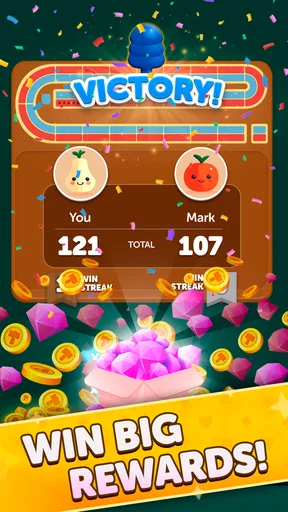
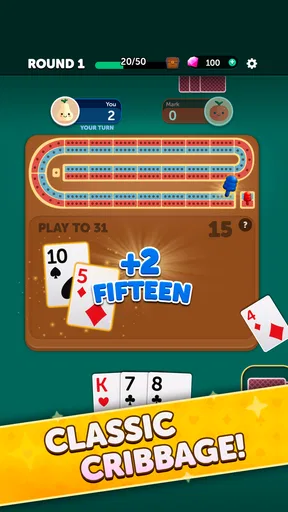
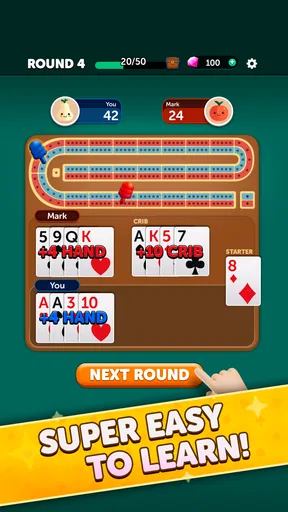
Our Review of Cribbage Classic - Card Game
 Analysis by Appyee
I came to Cribbage Classic looking for a card game that would give me something to think about without demanding a long commitment. That is exactly where this release fits. It turns the traditional cribbage experience into a compact digital routine: choose cards, build the best possible hand, watch the score develop, and decide whether I want to play another deal. The rules are familiar to cribbage players, while the format makes the game easy to pick up during a quiet break.
My first impression was that the game understands what makes cribbage appealing. It is not simply about drawing strong cards. Every choice has a second consequence because the cards I place in the crib may help the opponent. That tension gives even a short hand some weight. I found myself planning around pairs, runs, fifteens, and the cut card rather than playing on autopilot.
FunCraft Games presents this as a free card game for everyone, and that description is accurate in the practical sense: the central activity is easy to understand, suitable for casual play, and available without an upfront purchase. The game has an average rating of 4.8 from around 5.7 thousand ratings, alongside more than 100 thousand installs, so it has already found an audience among people who want a straightforward cribbage option.
How the cribbage loop feels from the first card to the next deal
I find the appeal of a cribbage hand lies in how each choice carries forward: a discard shapes the crib, pegging changes the immediate risks, and the count reveals what the hand was really worth. That makes even a brief session feel like a small exercise in judgment rather than a sequence of random plays. I’ll look at how that rhythm helps me decide whether to deal again or call it a day.
The first action is choosing what to keep
The most important moment arrives before the hand really begins. I have to look at my cards and decide which combination gives me the best chance of scoring while also considering what I am sending away. A hand with several connected cards may offer a run, but breaking that group can sometimes create useful fifteens or protect me from giving the crib an obvious pair.
This is where the game becomes more interesting than a basic matching card game. The action is simple, but the decision is layered. I am not only asking, “What scores now?” I am also asking, “What will the cut card improve?” and “What might these discarded cards do for the other side?” That makes the opening choice feel meaningful even when the deal itself is ordinary.
For a new player, the best approach is not to chase every possible combination. I would start by identifying pairs and cards that can form fifteen, then look for connected values that could become a run. Keeping a balanced hand is often more reliable than holding one ambitious pattern. The app works well for learning this because each deal gives immediate practice with the same small set of ideas.
Experienced players will recognize that cribbage rewards restraint. A visually attractive group of cards is not always the best group to keep. Sometimes a modest hand is preferable if it avoids donating an easy scoring combination. That defensive layer is one of the reasons I did not find the game empty or repetitive after a few rounds.
Feedback arrives in small, satisfying beats
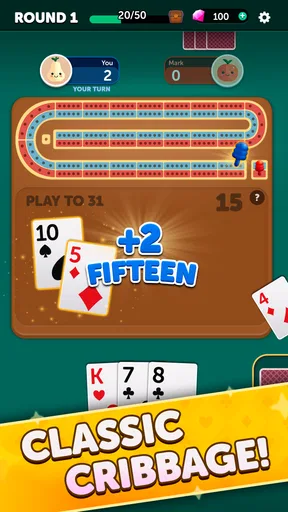
Once play moves into the pegging phase, the rhythm changes. Instead of making one large decision, I respond to the running total and the cards already played. I have to watch the count, avoid going over the limit, and look for chances to score through a fifteen, a pair, or a sequence. The feedback is more immediate here because every card can alter the tactical situation.
I particularly like the contrast between planning the hand and reacting during pegging. The first part rewards calculation before anything is played. The second asks me to stay alert and adjust. If I hold a card that could complete a run, I may need to wait rather than reveal it too early. If the count is approaching the limit, a safe card can be more valuable than an exciting one.
That back-and-forth creates a useful feedback rhythm: I play, I see whether the move produces points or changes the opponent’s options, and then I prepare for the next response. The game does not need elaborate effects to make this engaging. Cribbage already supplies the tension, and the digital format keeps the information close enough to follow without making the table feel cluttered.
One practical tip helped me avoid careless losses. I stopped evaluating each card only by its immediate score and began tracking what the opponent had already shown. If several low cards have appeared, the value of a possible fifteen changes. If a likely pair has been broken up, I become less confident about waiting for a matching card. This kind of running awareness is more useful than memorizing a single opening strategy.
The scoring stage is the real reward
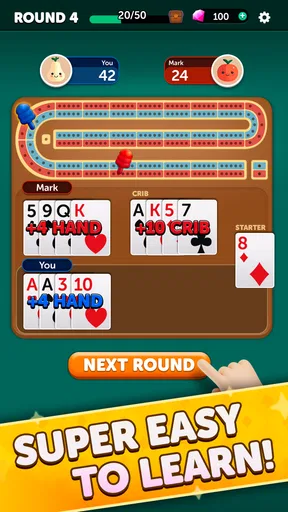
The reward in this game is not just reaching the end of a match. It is seeing a carefully prepared hand produce more points than expected. A hand that looked average can become valuable after the cut card, while a promising setup can collapse because the right value never appears. That uncertainty gives the scoring stage a satisfying reveal.
I also enjoy the way cribbage separates several kinds of success. A strong hand can score during counting, but good pegging may rescue a weaker deal. Careful discarding can limit the opponent’s crib even when my own cards are not impressive. That means I rarely feel that one unlucky draw has decided everything. There are usually still choices available.
For someone new to the game, the scoring can feel like the steepest part of the learning curve. The basic goal is easy, but the number of scoring combinations takes time to absorb. My advice is to focus on the most common patterns first: making fifteen, spotting pairs, and recognizing short runs. Once those become automatic, the more advanced decisions become much easier to understand.
The game is especially suited to players who enjoy visible progress within a small space. A complete hand can teach more than a passive round of a simpler card game because each point reflects a decision. I found that even when I lost, I usually had a particular moment to reconsider: a discard that helped the crib, a pegging card played too early, or an overly optimistic hand selection.
Why another session starts after the board clears
The reset is important. After the hand is counted and the score settles, the next deal removes the emotional baggage of the previous one without erasing what I learned. A bad choice becomes a lesson rather than a permanent setback. That makes it easy to try again immediately, especially when I feel I can improve one part of my play.
This is the strongest part of the game’s everyday appeal. I can play when I have a short amount of free time, stop after a hand, or continue when the result leaves me curious. The loop does not depend on a long story, a large collection, or a complicated progression system. The reason to begin again is simply that the next deal offers a new puzzle.
A realistic use case is a short evening break when I want more involvement than scrolling but less commitment than a full strategy game. I can play a few hands, test whether a more defensive discard works, and put the phone down without needing to remember a campaign or manage a large set of objectives. It also works for a player who wants to practice cribbage rules before playing with people in person.
That same simplicity can be a limitation. If I want a broad multiplayer community, a large variety of card games, or a highly social experience, this is not the obvious choice. A general card-game platform may offer more modes and opponents, while a physical board and deck remain better for conversation and shared time at a table. This app is strongest when I want the cribbage decision-making itself.
Useful habits that make each deal better
My first useful habit was to separate hand strength from crib value. A discard that looks harmless can be dangerous if it creates a pair or leaves cards close enough to form a run. Before confirming the choice, I look at both sides of the exchange. That extra pause is small, but it prevents the most frustrating kind of mistake: improving the opponent’s opportunity while gaining very little myself.
The second habit is to treat the cut card as a bonus possibility rather than a promise. It is tempting to build a hand around one perfect reveal, but doing so can result in a weak base hand. I prefer combinations that already have several ways to score, then appreciate the cut when it adds something. This makes my decisions more consistent and reduces the feeling that every deal depends on luck.
The third is to use pegging to control risk. A high card may be useful for avoiding an immediate fifteen, but it can also leave me exposed later. A low card may seem less exciting, yet it can preserve flexibility when the count is near the limit. I found that the best move often depends on what has already been played, not on the isolated value of the card in my hand.
Finally, I recommend reviewing the hand after the score rather than instantly blaming the deal. If I lost by a small margin, I ask whether the discard, the cut-card expectation, or the pegging sequence created the difference. This turns a quick game into a gradual learning tool. The reset becomes more valuable when it carries one clear adjustment into the next round.
Who will enjoy this version of cribbage
I would recommend it to people who already know cribbage and want a convenient digital table. It is also a good starting point for patient beginners who enjoy learning through repeated examples. The free entry makes it easy to try, and the Everyone content rating keeps it appropriate for a broad audience. The current version is 1.2.25987, and it runs on Android seven point zero or later.
The game is a particularly good fit for players who like thoughtful choices but do not want a demanding interface. Cribbage has enough depth to reward experience, yet each turn remains understandable. I can play casually while still noticing improvement in my discard choices and pegging decisions. That balance is harder to find in many quick card games, which often rely more heavily on luck or rapid reactions.
I would be more cautious about recommending it to someone who dislikes traditional scoring systems. The appeal depends on enjoying combinations, counting, and small tactical advantages. If the idea of remembering how pairs, runs, and fifteens interact sounds like work, a simpler solitaire game may be more relaxing. Likewise, players seeking constant novelty may find the focused cribbage format narrow rather than comforting.
There is also a financial point to keep in mind. The game is free to start, but optional in-app purchases range from less than a dollar to about fifty dollars per item. That does not change my view of the core card-game concept, but I would still suggest checking purchase prompts carefully, especially if the phone is shared with a child. The age rating is Everyone, yet responsible purchase settings remain sensible on any device.
How it compares with a physical deck and other card apps
Compared with a physical cribbage board, the digital version is faster to set up and easier to use alone. I do not need to find a deck, track pegs, or calculate every scoring combination manually. That convenience is valuable when I want a quick hand. The physical version still wins for social atmosphere, table talk, and the tactile satisfaction of moving pegs by hand.
Compared with solitaire, this game gives me more direct opposition. I am not only arranging cards toward a target; I am trying to make choices that score while limiting the other side. Compared with broad card-game collections, it offers less variety but more focus. I would choose this when I specifically want cribbage rather than a menu of unrelated games.
Its best alternative may be a real match against a friend who already understands the rules. That experience brings conversation and a shared sense of occasion that a solo digital session cannot reproduce. Still, the app is useful between those matches because it lets me keep the scoring patterns fresh and practice decisions that are easy to overlook when I only play occasionally.
My verdict on the complete action-feedback-reward-reset loop
After spending time with it, I see Cribbage Classic as a focused and approachable way to play one traditional card game well. The central loop is clear: choose a hand, react during pegging, collect the reward of a well-built score, then reset for a new puzzle. Each stage supports the next, and the short format gives me a reason to continue without making another session feel compulsory.
The main trade-off is narrowness. This is not a replacement for a social card table, a large multiplayer hub, or a collection packed with different modes. It is a dedicated cribbage experience, and that focus will either be its greatest strength or its biggest weakness depending on what I want from a card app.
For me, the balance works. I like that the game gives ordinary deals enough strategic texture to keep me involved, while still letting me stop after a small amount of play. FunCraft Games has chosen a format that respects the original game’s decisions instead of burying them under unnecessary distractions. If you want a free, compact cribbage game for Android and enjoy learning from each hand, I think it is worth trying.
Verdict
Strengths of Cribbage Classic - Card Game
- Clear scoring system helps beginners learn cribbage quickly.
- Playable offline, making it useful during travel or without mobile data.
- Multiple difficulty levels suit both casual and experienced players.
- Quick matches fit well into short breaks or relaxed gaming sessions.
- Automatic score tracking reduces mistakes during hands and pegging.
Limitations of Cribbage Classic - Card Game
- Ads may interrupt play unless you purchase the ad-free option.
- The interface feels dated compared with newer card game apps.
- Limited customization may disappoint players seeking more table themes.
- Computer opponents can feel predictable after extended play.
- No strong social features for competing with friends online.
Other Releases by FunCraft Games
View All


Similar Picks in This Category
View All
Solitaire - Classic Card Games
MobilityWare4.6

UNO!™
Mattel163 Limited4.3

Spider Solitaire: Card Games
MobilityWare4.6

Solitaire.com - Classic Cards
Tripledot Studios Limited4.7

Plants vs. Zombies™ Heroes
ELECTRONIC ARTS4.1

Hearthstone
Blizzard Entertainment, Inc.4.1
Frequently Asked Questions
How do you play Cribbage Classic - Card Game?
Cribbage Classic follows the traditional rules of cribbage, using a standard 52-card deck. You and your opponent take turns playing cards, score points for combinations such as pairs, runs, and fifteens, and then count your hands after the play. The game also includes the crib, a separate hand that the dealer scores, so learning when to discard is an important part of each match.
Is Cribbage Classic suitable for beginners?
Yes, Cribbage Classic is generally approachable for new players, especially because the app handles card counting and scoring automatically. Beginners can focus on understanding the flow of the game instead of calculating every combination by hand. It is still helpful to know the basics of pegging, hand values, the crib, and the goal of reaching 121 points before starting.
Does Cribbage Classic offer different difficulty levels or game modes?
Cribbage Classic is designed primarily as a digital version of the traditional two-player card game, with options that may allow players to adjust the challenge or customize the experience depending on the platform version. The computer opponent can provide a useful practice match for casual players, while experienced cribbage fans may prefer a more competitive setting.
Can I play Cribbage Classic offline?
One of the main advantages of a standalone card game such as Cribbage Classic is that it can typically be played without a constant internet connection, making it convenient for travel, waiting rooms, or areas with limited service. However, features such as advertisements, updates, analytics, or any online-related options may require connectivity, so availability can depend on the installed version.
Is Cribbage Classic free to download, and does it contain ads or in-app purchases?
Cribbage Classic may be available as a free download, but the exact monetization model can vary between Android and iOS versions and may change with updates. Free editions commonly include advertising, while some versions may offer optional purchases to remove ads or unlock additional settings. Check the store listing on your device for the current price and purchase details before downloading.
Play our best games!


